
No products in the cart.
Mastering Horology: A Comprehensive Guide to Removing the Crown and Stem from a Quartz (Battery) Watch
how to remove winder from battery watch
For many watch enthusiasts and DIY hobbyists, the first step into the intricate world of watch repair is often the removal of the “winder”—technically known as the crown and stem. Whether you are looking to clean the case, replace a damaged dial, or perform a full movement swap on a battery-operated quartz timepiece, understanding the delicate mechanics of the setting lever is crucial.
In this professional guide, we will break down the precise steps to safely extract the stem without damaging the movement’s internal gear train.
1. Prerequisites: Tools of the Trade
Before attempting to open a timepiece, ensure you have a clean, lint-free workspace. Professional results require professional tools:
-
Case Back Opener: A Jaxa-style wrench for screw-down backs or a case knife for snap-back cases.
-
Non-Magnetic Tweezers: Anti-static (carbon-fiber tipped) is preferred for quartz movements to avoid short-circuiting the battery.
-
Eye Loupe: 5x or 10x magnification to locate the release mechanism.
-
Finger Cots: To prevent skin oils from acidicly etching the metal components.


2. Step-by-Step Execution
Step 1: Open the Case Back
Identify the case type. For most battery-powered watches, you will encounter either a Snap-Back or a Screw-Down case.
-
Caution: Always ensure the watch is secured in a movement holder to prevent slipping, which could scratch the case or damage the coil.
Step 2: Identify the Movement Caliber
Once open, identify the movement manufacturer (e.g., Miyota, Seiko/Hatsori, or ETA). Quartz movements differ from mechanical ones; they often have a visible “push” point or a small lever that appears only when the crown is in a specific position.

Step 3: Locate the Stem Release Mechanism
This is the most critical step. You are looking for one of two mechanisms:
-
The Dimple/Push-Button: A tiny, circular indentation often marked with an arrow or the word “PUSH.” It is usually located near where the stem enters the movement.
-
The Setting Lever: In some movements (like certain Seiko calibers), a small metal tab pivots out only when the crown is pulled out to the “Time Setting” position.

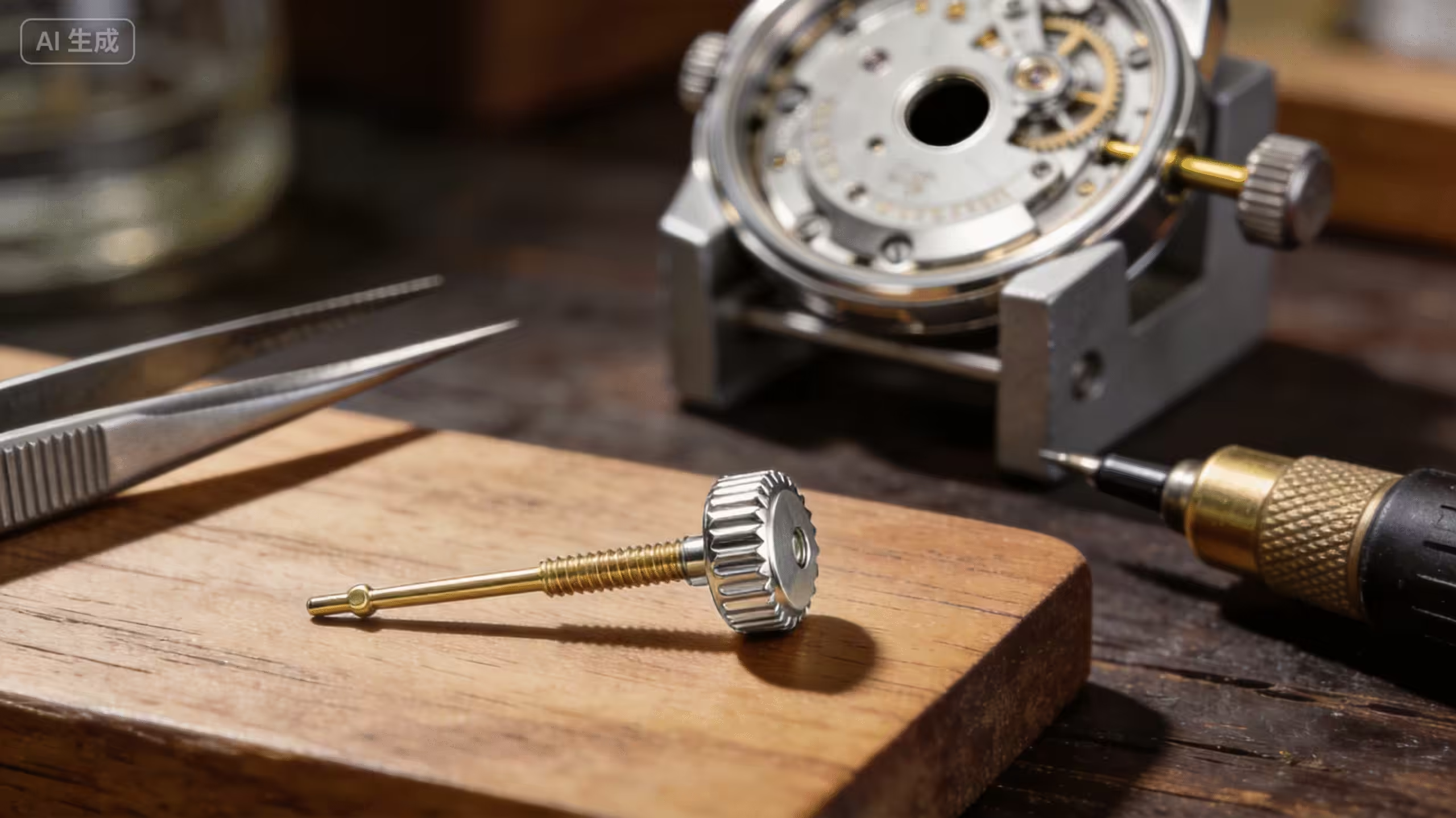
Step 4: The Extraction
-
Neutral Position: Generally, it is safest to remove the stem while the crown is in the Neutral (in) position to avoid de-aligning the keyless works. However, check your specific caliber’s manual.
-
The Press: Using a fine-tipped tool or tweezers, apply gentle, vertical pressure to the release dimple.
-
The Pull: While maintaining pressure, simultaneously grasp the crown and pull it outward. It should slide out with zero resistance.
-
Pro Tip: If you feel resistance, STOP. Forcing the stem can bend the setting lever, necessitating a full movement teardown.
-
3. Common Pitfalls to Avoid
Touching the Coil
Quartz movements contain a copper coil (usually orange/gold). This is extremely fragile. One slip with your tweezers can break the hair-thin wire, instantly killing the movement.
Losing the “Keyless Works” Alignment
If you press the release button too hard or use a tool that is too large, you may displace the clutch wheel or the yoke. If this happens, the stem will not click back into place later, and the watch will require a professional “dial-off” service to reset the gears.
4. Reinstalling the Crown and Stem
Reinsertion is generally simpler but requires finesse:
-
Inspect the stem for any dust or old lubricant.
-
Gently insert the stem into the tube while slowly rotating the crown. This helps the square part of the stem align with the sliding clutch.
-
You should hear a definitive “click” as the setting lever locks back into the stem’s groove.
-
Test all positions (Date setting vs. Time setting) to ensure the hacking mechanism works correctly.
Conclusion
Removing the crown and stem from a quartz watch is a foundational skill in horology. While “battery watches” are often seen as simpler than their mechanical counterparts, their internal components are miniaturized and require a steady hand and a microscopic eye.
Are you working on a specific watch brand? If you’re unsure where the release button is located on your specific caliber (e.g., a Rolex-style homage or an Aura Winder display piece), feel free to leave a comment below or contact our technical team for a movement-specific diagram.
Disclaimer: Watch repair is a delicate craft. Attempting these steps on high-value timepieces without experience may void warranties. When in doubt, consult a certified watchmaker.

Leave a comment