
No products in the cart.
Showing 1–12 of 192 resultsSorted by popularity
Antimagnetic Watch Winders
Does a watch winder magnetize your watch? It is the question we get asked most often about this category, and it deserves a straight answer before anything else: a correctly built winder should not, because the field from a small DC motor collapses within a few centimetres, and the movement sits further away than that. Where people run into trouble is with unshielded motors in thin plastic shells, and with watches that are already at the edge of their anti-magnetic rating.
What the physics actually says
A winder uses a low-torque DC or stepper motor with permanent magnets in the rotor. Field strength falls off with roughly the cube of distance, so at 5 cm from the motor can there is very little left, and at the winding cup there is typically less than the ambient field of a laptop speaker or a magnetic phone case. The real-world risk is not the winder in normal use — it is a watch resting directly against a motor housing, which happens in cheap designs where the cup sits on top of the gearbox.
What “antimagnetic” means on this page
Two different things get called anti-magnetic here, and mixing them up is where buyers go wrong. The first is the watch: ISO 764 defines a resistance level of 4,800 A/m for a watch marked “antimagnetic”, while properly shielded engineering pieces (Milgauss, Ingenieur, Railmaster and their descendants) are rated in thousands of gauss. The second is the winder: motors with shielded cans and a cup mounted on a non-magnetic spindle. This category exists to make the second easy to find for people who own the first.
The 192 pieces, by capacity
This is the largest group in the store, from a $28 replacement cup to a 24-slot elite cabinet at $4,299, with a median around $484. The useful way in is capacity, not price:
- One to four slots. Bedside units. Look for a metal motor can rather than a bare plastic housing, and a cup that sits on a spindle with visible clearance.
- Six to nine. Cabinets where each rotor has its own motor — fewer shared shafts, less stray field in the middle of the box.
- Twelve and up. The 24-slot striped ebony cabinet at $3,899 is the reference build: independent motors, shielded housings, hardwood body.
If your watch is already magnetized
The symptoms are consistent: it gains time, sometimes minutes a day, and a compass held near the case deflects. Demagnetizing is cheap and quick — any watchmaker does it in a minute, and a demagnetizer costs less than a service. Then look at the winder’s placement rather than replacing it: a unit beside a large speaker, a subwoofer, an induction hob or a magnetic knife rack is being exposed to more field than its own motor produces.
The right setting matters more than the shielding
Over-winding is a far more common cause of damage than magnetism, and it is entirely avoidable. Check your movement’s verified turns-per-day in our TPD settings database and use alternating direction unless the manufacturer specifies otherwise. The longer technical background — including the field measurements behind the shielding argument — is in our 2026 white paper on movement anti-magnetism and TPD.
Common questions
What actually makes a winder antimagnetic?
The motor. A standard DC motor puts out a small field; a shielded or brushless unit keeps it away from the caseback. For a watch rated to 4,800 A/m, that distance is the whole point of the category.
Do I need one for a Milgauss or a Railmaster?
Only if the watch is already magnetically resistant and you want to keep it that way. A winder cannot demagnetise a watch; it can avoid adding field. A watch running fast needs a demagnetiser, not a new winder.
Why does this category have 192 products from $28 to $4,299?
Because it is a cross-cut, not a product line – it collects every model in the catalogue whose motor is shielded, from a $28 single to a $4,299 cabinet. Narrow it with the capacity or material categories.
Could a magnetic lid catch be the real problem?
Often, yes. Magnetic catches are the usual culprit in a display box, not the motor. If a watch only gains time while stored, suspect the catch or a nearby speaker first.


Luxury Roroos Wooden Quad Watch Winder with Quite Motor – Ebony
Original price was: $599.00.$299.00Current price is: $299.00.
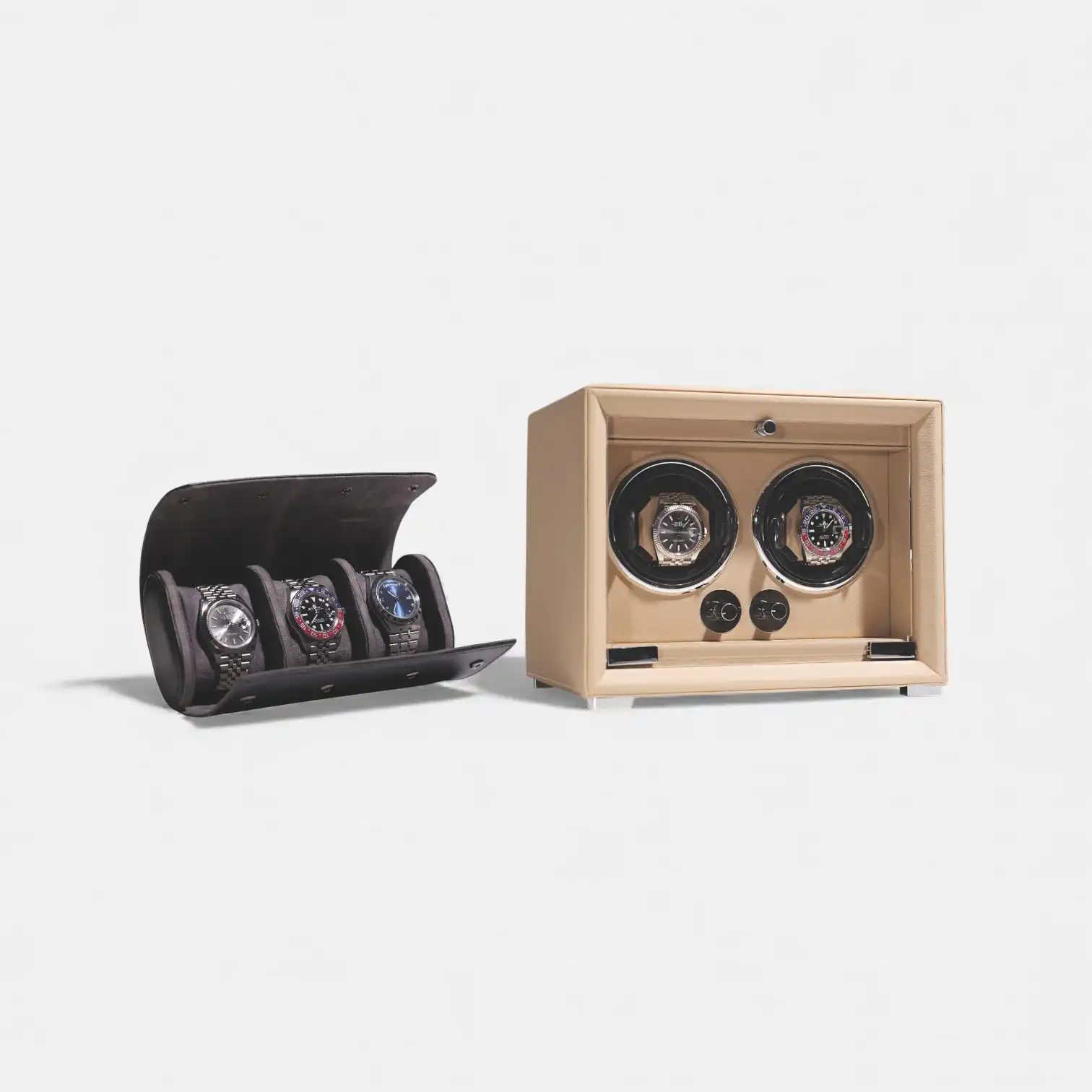
High Roller Set (Bundle & Save) – Watch Box – Leather
Original price was: $629.00.$439.00Current price is: $439.00.
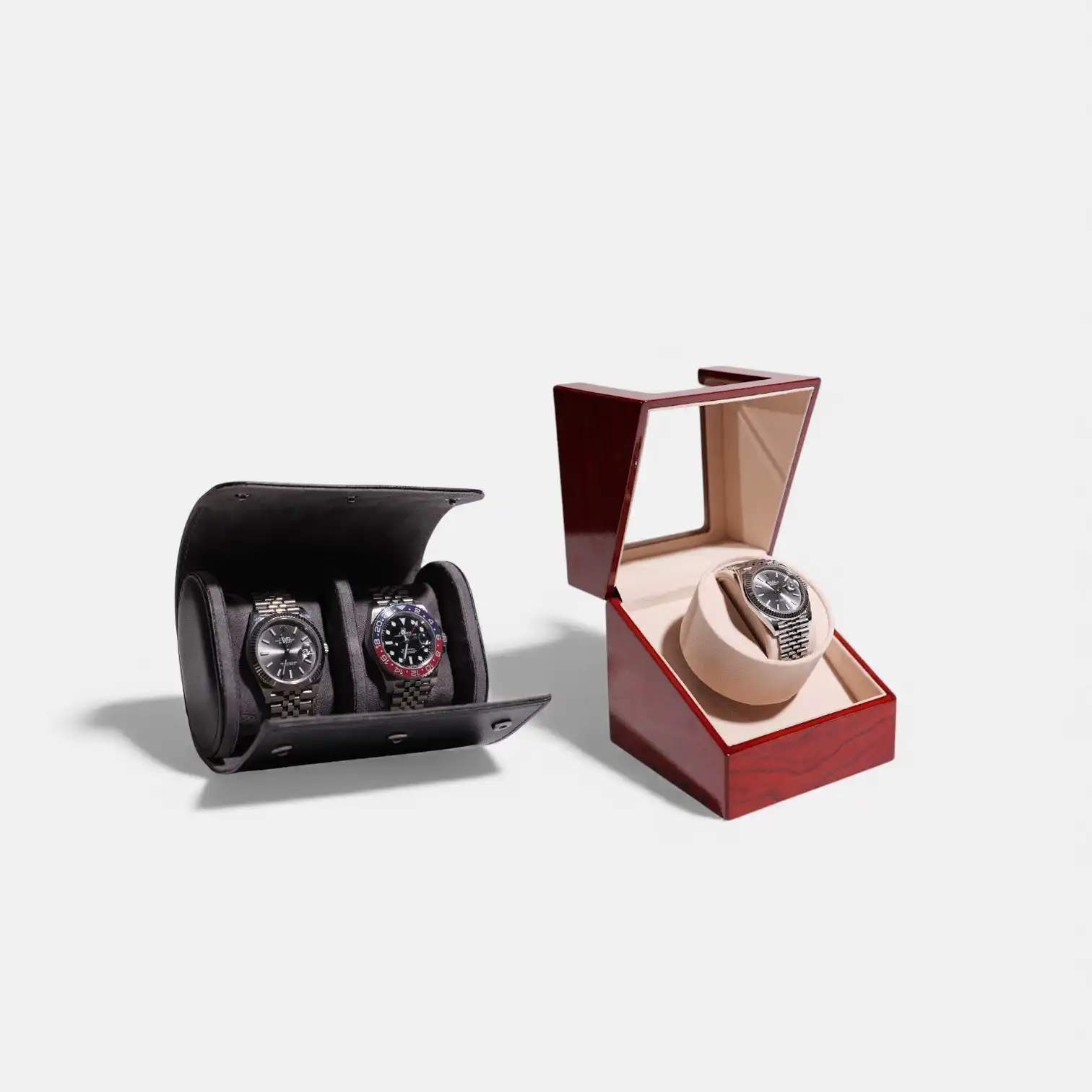
Double Deluxe Set (Bundle & Save) – Double Watch Box
Original price was: $279.00.$195.00Current price is: $195.00.
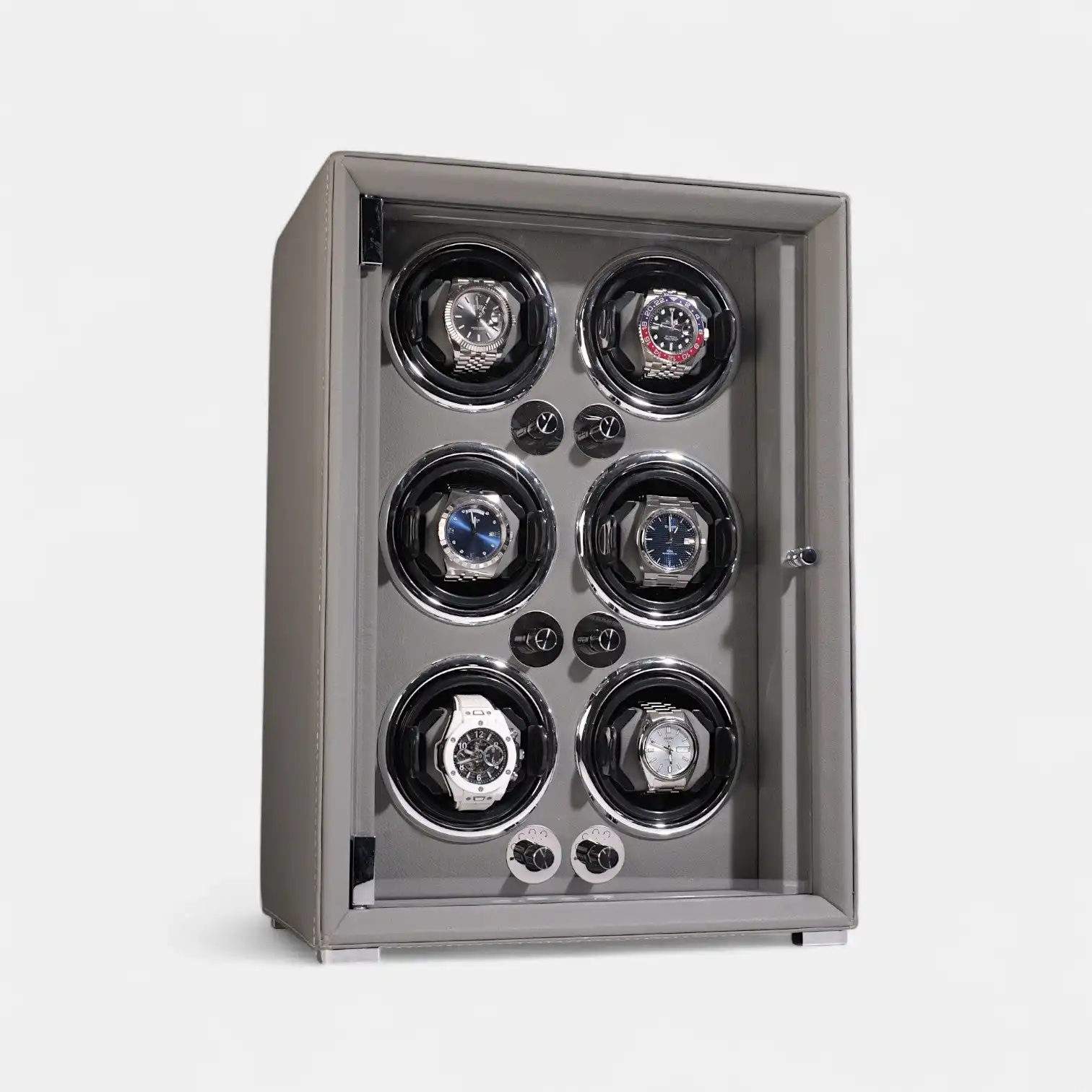
Imperium Watch Winder – Leather
Original price was: $1,499.00.$1,049.00Current price is: $1,049.00.
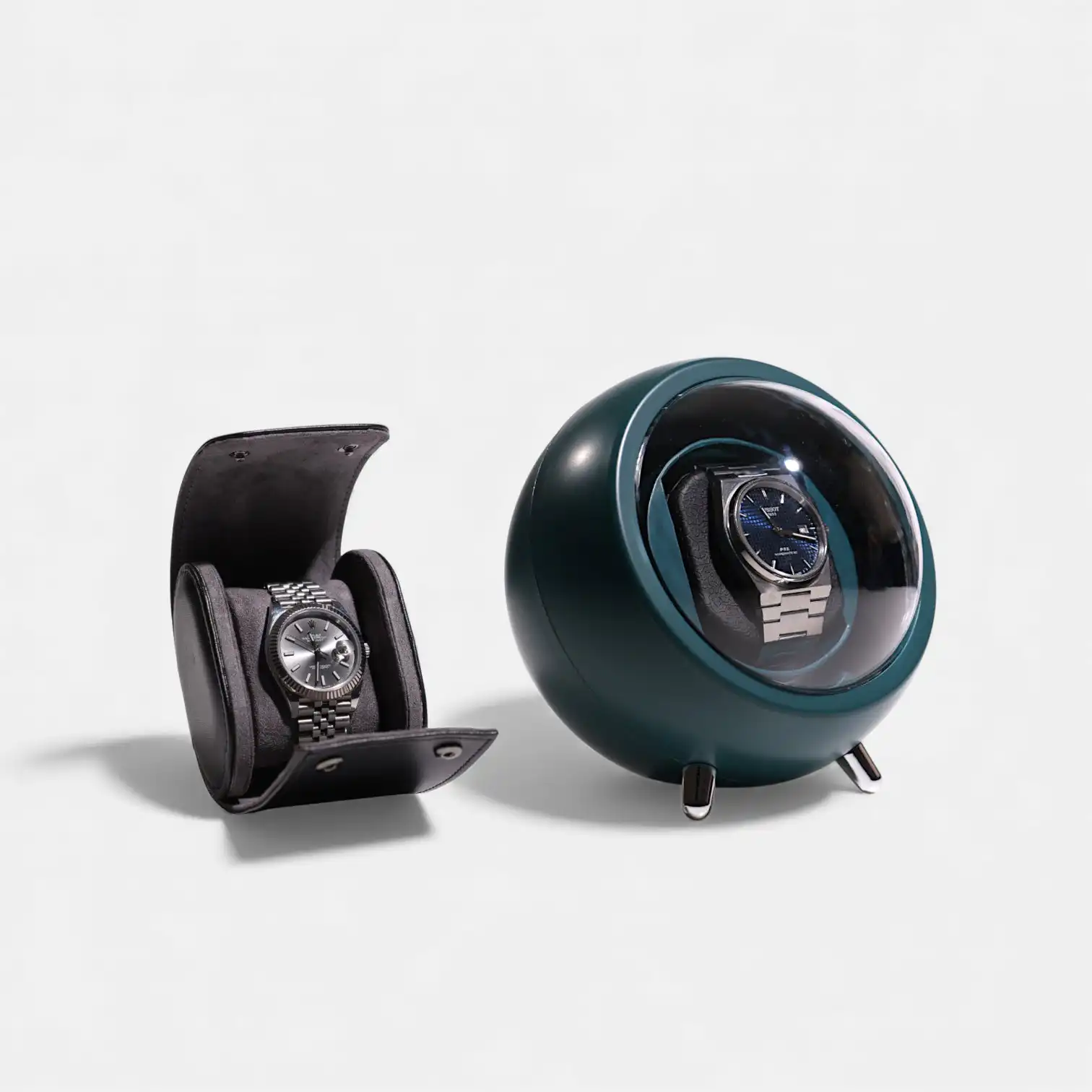
New Starter Set (Bundle & Save) – Watch Box – Leather
Original price was: $219.00.$153.00Current price is: $153.00.
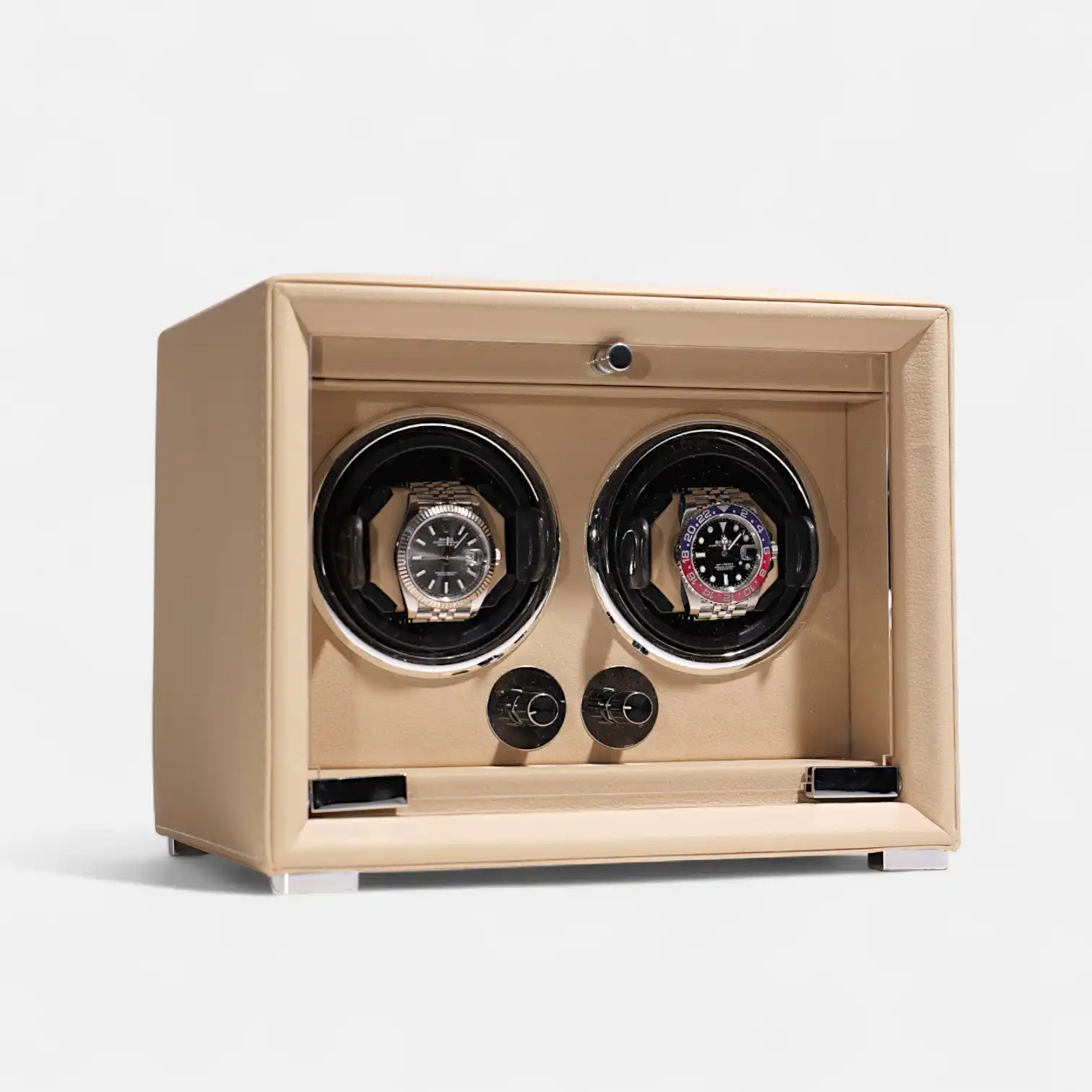
Auto Watch Winder, German Leather Home Use for Automatic Mechanical Watches
Original price was: $699.00.$377.00Current price is: $377.00.
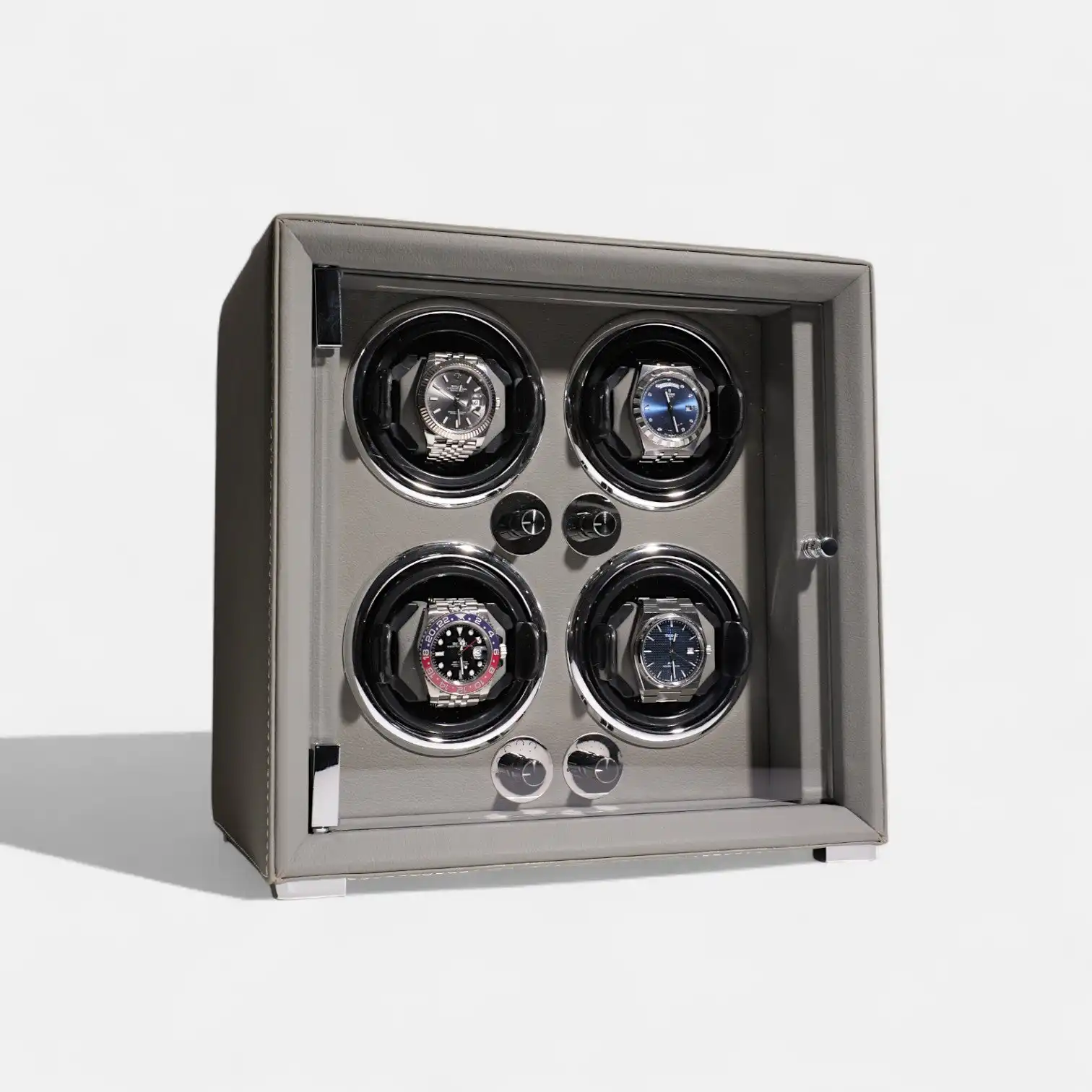
Leone Watch Winder – Leather
Original price was: $899.00.$629.00Current price is: $629.00.
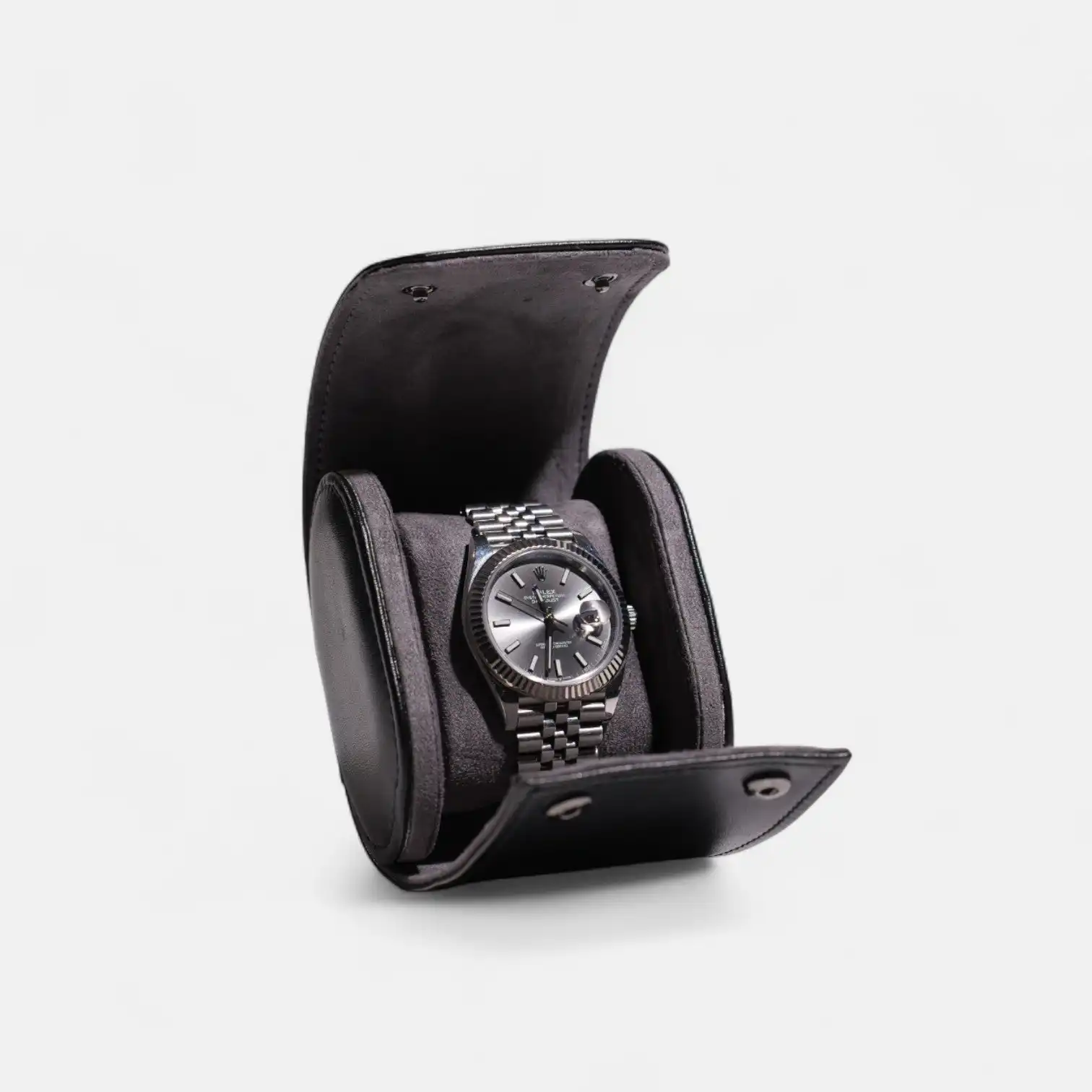
Voyager Watch Travel Case – Leather
Original price was: $99.00.$69.00Current price is: $69.00.
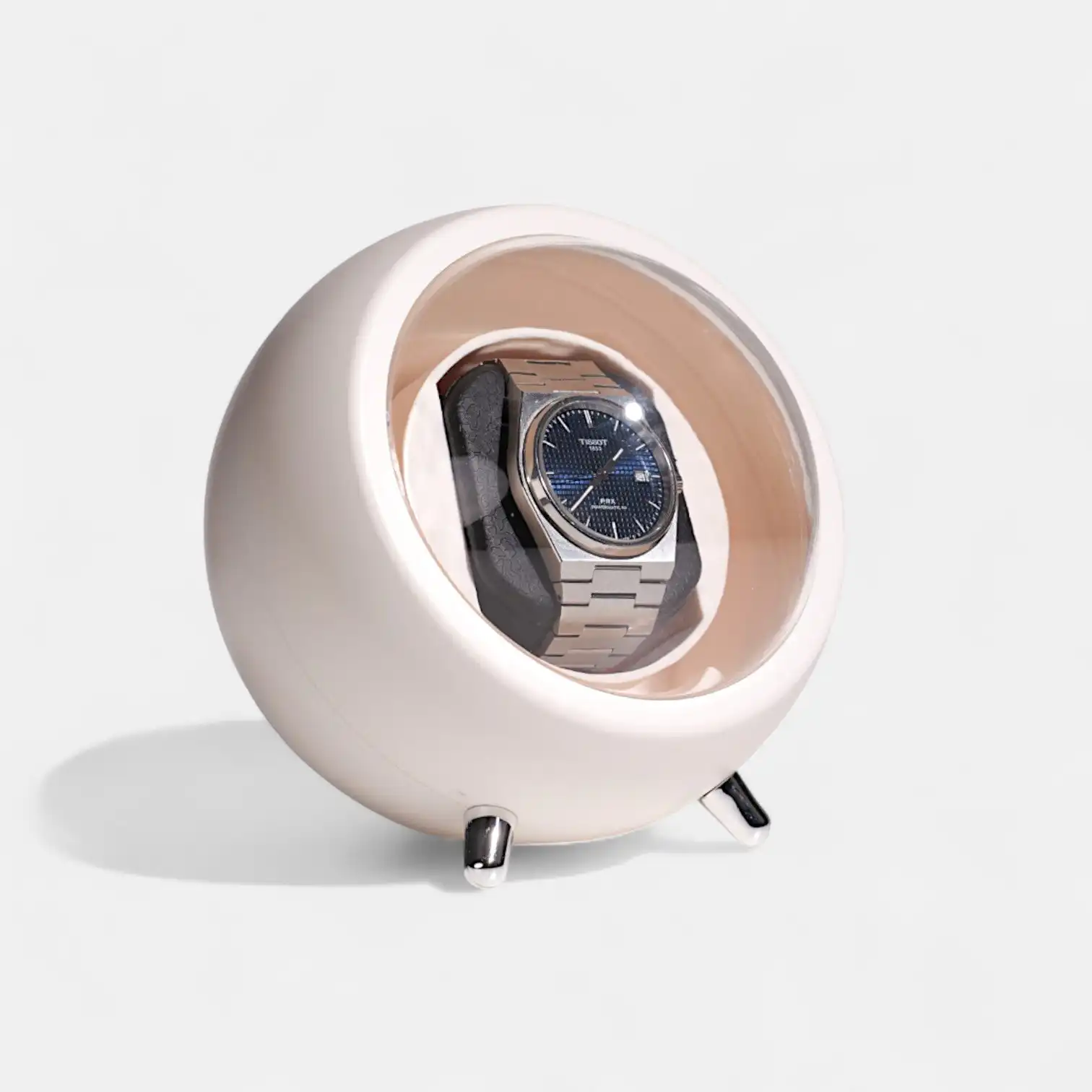
Cyclops Watch Winder – Leather
Original price was: $189.00.$132.00Current price is: $132.00.
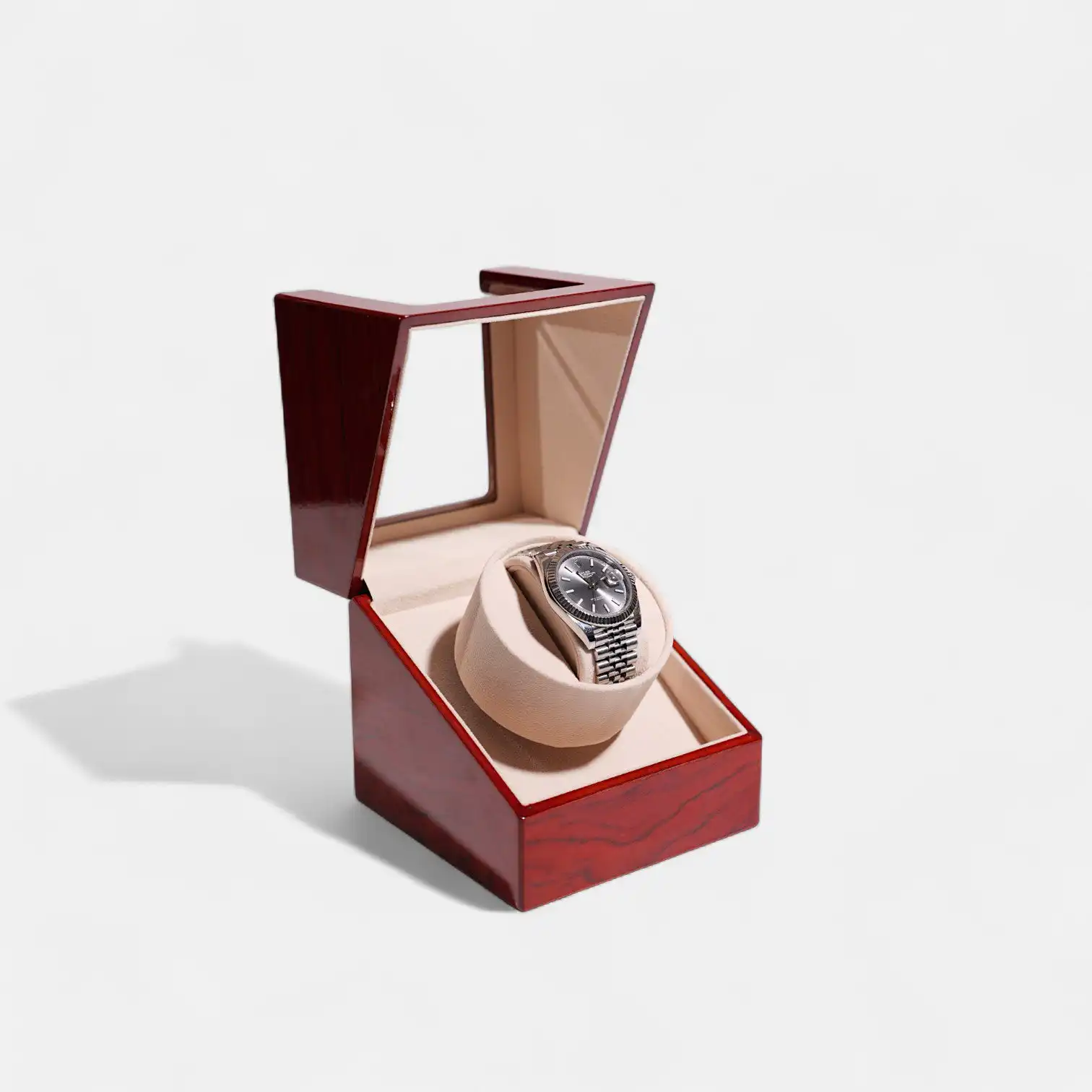
Carina Watch Winder – Acrylic
Original price was: $199.00.$139.00Current price is: $139.00.
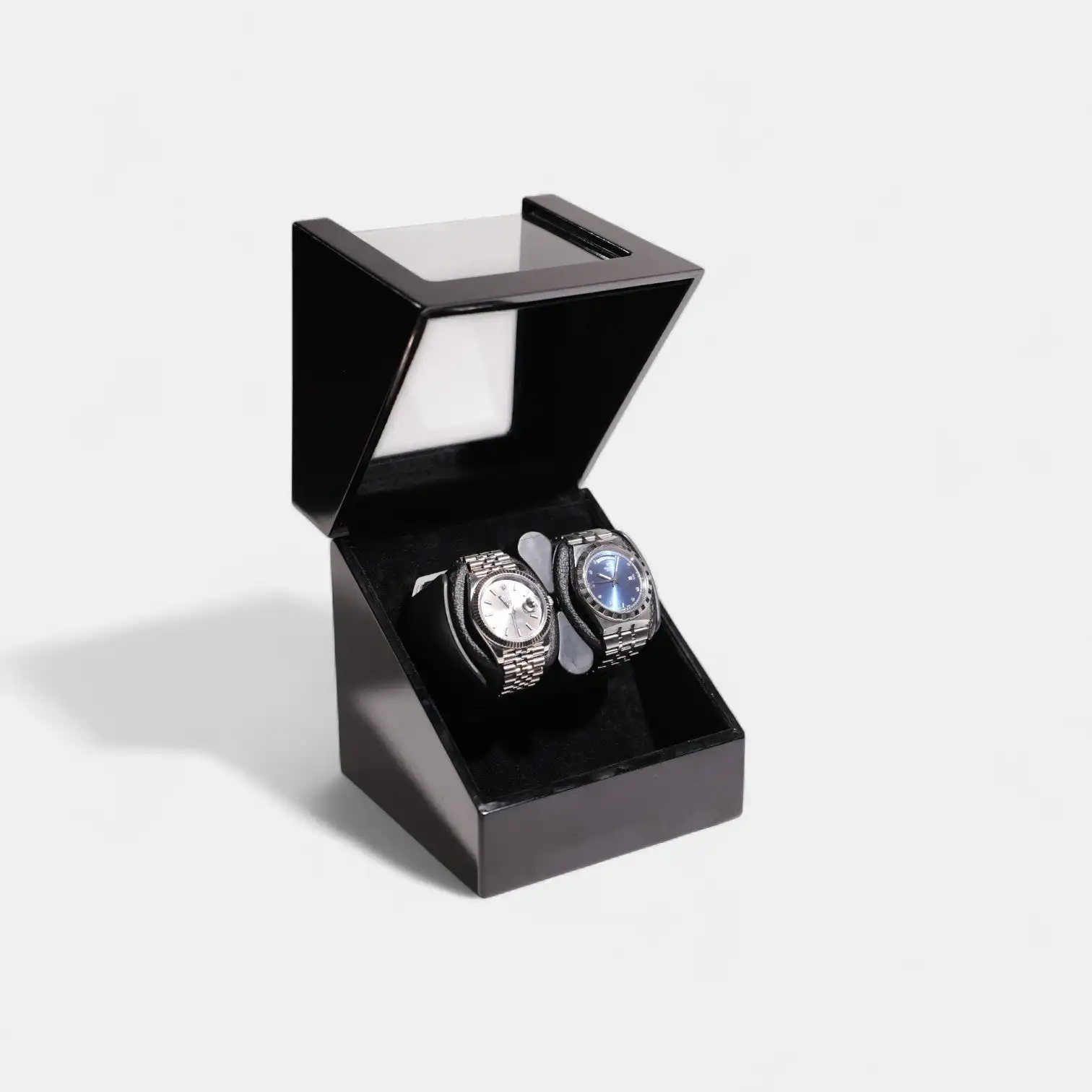
Atlas Watch Winder – Acrylic
Original price was: $249.00.$174.00Current price is: $174.00.
Essential Guide: Anti-Magnetic Protection & TPD Selection
Why Anti-Magnetic Protection Matters for Automatic Watches
Modern living spaces are saturated with unseen electromagnetic interference. Everyday devices—including smartphones, laptops, magnetic phone mounts, smart speakers, and wireless fast chargers—generate localized magnetic fields capable of disturbing sensitive watch calibers. When an automatic timepiece becomes magnetized, its micro-thin hairspring coils stick together, forcing the balance wheel to oscillate erratically. This results in severe timekeeping inaccuracies, causing your luxury watch to run minutes fast or slow every day. Standard watch winders place electric motors directly beneath the watch mounts, unintentionally subjecting your timepieces to continuous electromagnetic flux. Investing in an anti-magnetic watch winder eliminates this silent risk, protecting delicate balance springs and keeping your automatic movements running with chronometer-grade precision.
How Our Electromagnetic Shielding Technology Works
To neutralize motor-induced magnetic hazards, our winders integrate an advanced physical isolation barrier between the electric motor drive and the watch cushion chamber. Engineered with multi-layered high-permeability alloy shielding, the housing redirects and absorbs low-frequency stray magnetic fields generated by the motor coils during operation. This specialized structural barrier ensures that residual magnetic strength within the watch holding area remains strictly below 0.5 Gauss—well within the safe limit equivalent to Earth’s natural background magnetic field. Your timepieces stay fully wound in a 100% magnetically neutral environment, ensuring complete safety for haute horlogerie movements.
How to Choose the Right TPD & Rotation Settings
Configuring proper winding parameters prevents mainspring overwinding while ensuring optimal power reserves across your watch collection:
- Turns Per Day (TPD): Most modern automatic watch calibers (such as those from Rolex, Omega, Tudor, and ETA) require between 650 and 950 TPD to remain fully energized.
- Rotational Direction: Check your caliber’s winding direction specification. Calibers may wind Clockwise (CW), Counter-Clockwise (CCW), or Bidirectionally (Both).
- Independent Programmable Rotors: Our winders feature individual rotor control, allowing you to customize precise TPD counts and rotation directions for each individual watch slot to perfectly match different movement specifications.
